Style is a Proven Strategy
Why Taste Matters More Than You Think
4 min read ·
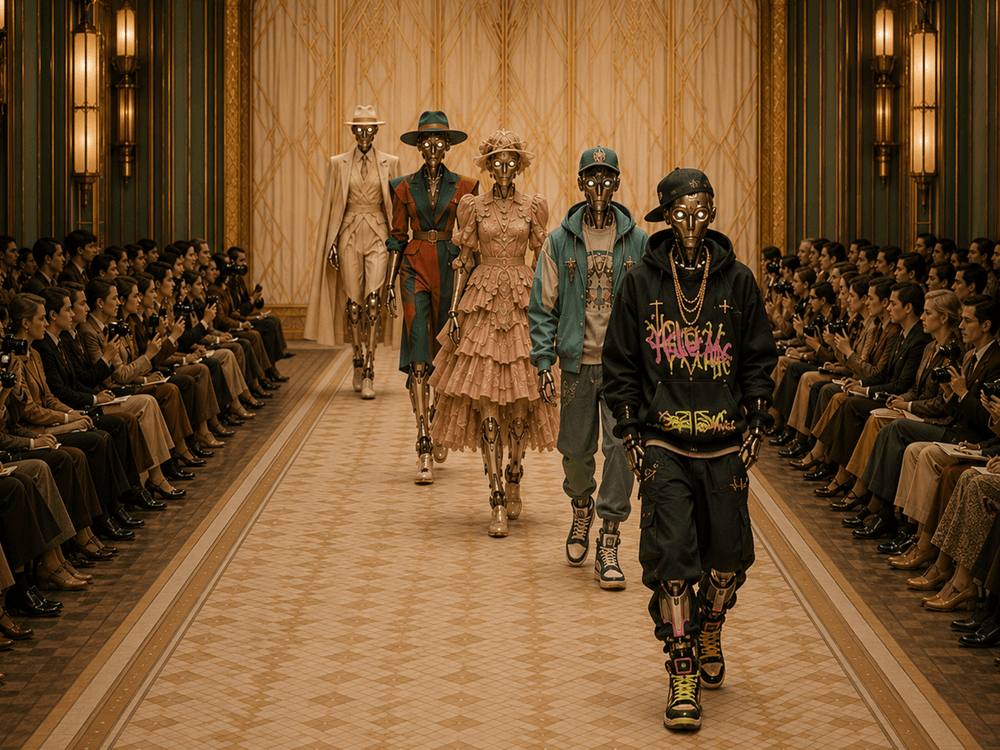
A lot of creative folks are afraid right now. Some quietly, some loudly. They’re terrified that AI will make their skills irrelevant, that AI can now do what took them years to master. The rest of the creative folks, probably the best of them, are drawn to a seductive truth: since AI will make execution accessible to all, taste and style will be the only real differentiator. This easy execution access will fill the media world with so much garbage that the value of taste and style will significantly increase in the digital media world. But what exactly is taste and style? And why does it matter now more than ever?
A little about style, in the words of Charles Bukowski:
Style is the answer to everything
A fresh way to approach a
Dull or dangerous thing
To do a dull thing with style is preferable
To doing a dangerous thing without it
To do a dangerous thing with style
Is what I call art
Bullfighting can be an art
Boxing can be an art, Loving can be an art
Opening a can of sardines can be an art
Not many have style not many can keep style
I have seen dogs with more style than men
Although not many dogs have style
Cats have it with abundance
When Hemingway put his brains to
The wall with a shotgun, That was style
Or sometimes people give you style
Joan of Arc had style, John the Baptist
Christ, Socrates
Caesar, García Lorca
— ‘Style’ by Charles Bukowski, 1972
Style is beautiful. Beauty is created by people with good ‘taste’. A lot of lazy managers will tell you that ‘taste’ is just a personal preference, and that ‘personal preference’ can’t be wrong. In the business world, taste is not just a personal preference. To understand this better, a little about taste, in the words of Paul Graham, one of the most honourable investors of our time:
Saying that taste is just personal preference is a good way to prevent disputes. The trouble is, it’s not true. You feel this when you start to design things.
Whatever job people do, they naturally want to do better. Football players like to win games. CEOs like to increase earnings. It’s a matter of pride, and a real pleasure, to get better at your job. But if your job is to design things, and there is no such thing as beauty, then there is no way to get better at your job. If taste is just personal preference, then everyone’s is already perfect: you like whatever you like, and that’s it.
As in any job, as you continue to design things, you’ll get better at it. Your tastes will change. And, like anyone who gets better at their job, you’ll know you’re getting better. If so, your old tastes were not merely different, but worse. Poof goes the axiom that taste can’t be wrong.
- Paul Graham, Taste For Makers, 2002
Taste is learnable. Taste can be wrong. Taste is vastly underrated in software. And crucially: good taste is rare.
No industry understands this better than fashion. All luxury fashion houses have a single head under whose style direction multiple brands operate. This head single-handedly micro-manages every aspect of every collection. Their business moats depend fundamentally on this person’s ability to establish the right aesthetic direction before the rest of the market recognizes it. From top to bottom, the whole fashion industry eventually copies that aesthetic, until next year the head again improves it.
Much like tech startups, fashion operates at high speed. But fashion doesn’t win on speed of execution. Fashion wins on speed of taste-setting — on being the first to establish the right aesthetic and owning it before competitors can catch up.
The tech startup world is entering a similar disruption. Until now, most startup success depended on speed, on the ability to build better solutions faster than incumbents. That was the moat. But AI might change this. When the speed of building drops to near-zero for everyone, that moat will slowly evaporate. Incumbents will now be able to build as fast as startups.
Throughout tech history, from watches to refrigerators to cars, business moats initially depended on technical superiority. As that difference diminishes, branding and aesthetic positioning take over. The most tastefully positioned player then captures the highest market share or the highest profit margins. This happens because products start as utilities. Once technical differences disappear, they become identity signals. I feel a similar cycle is bound to happen in software, too. People will signal their taste through the software they use, the digital bank they choose, or the AI assistant they trust.
Every startup will need creative leadership that understands this shift. Someone who can establish taste credibility at startup velocity. A taste-maker who can sense the right direction and move fast enough to own the narrative before incumbents recognise what’s happening.